
Concrete Repair vs Replace: How to Choose
This is the decision that saves (or wastes) money. Use these checkpoints to decide whether repair is enough or replacement is the smarter long‑term move.
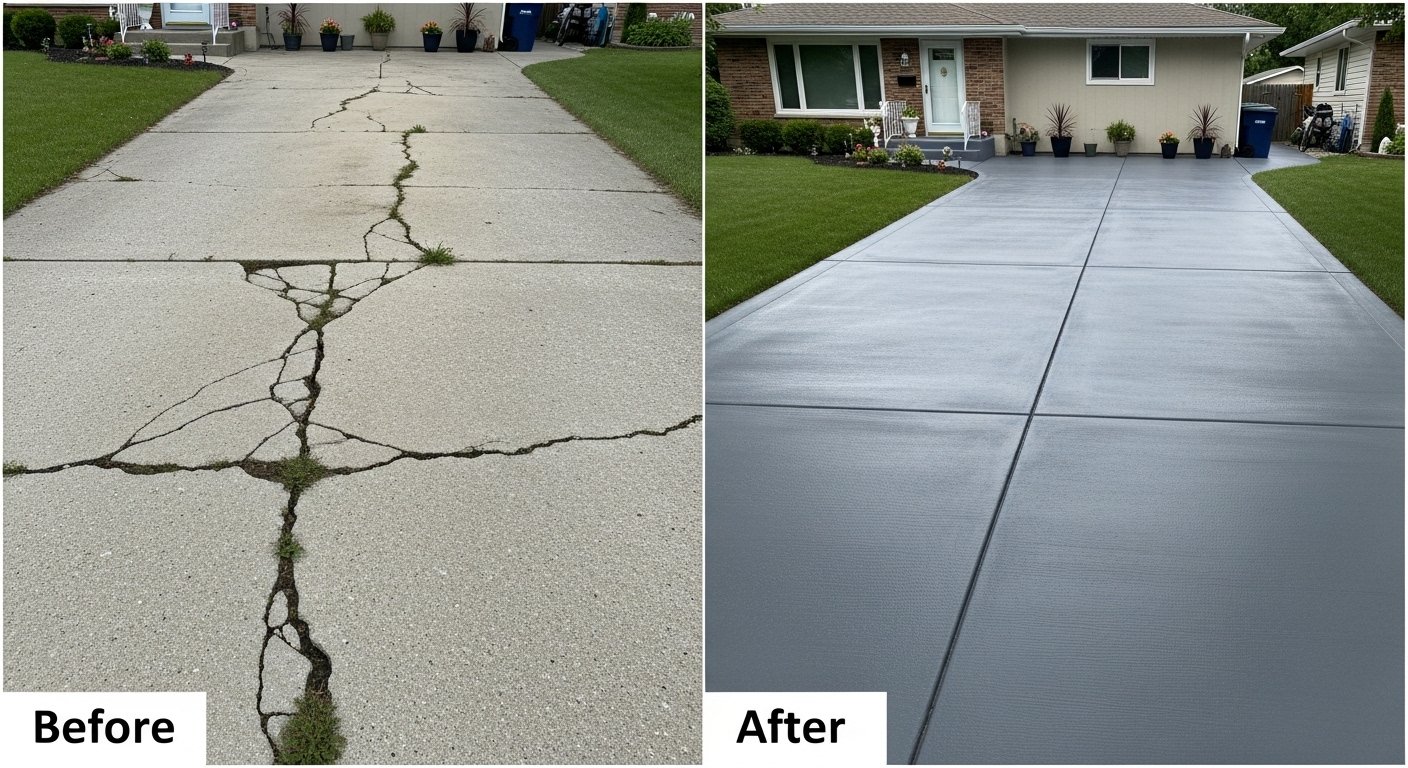
Repair is usually right when…
- cracks are minor and the slab is not moving significantly
- surface wear/spalling is localized
- the base is stable and drainage is acceptable
- you want to extend life before a future redesign
Replacement is usually right when…
- panels are settling, rocking, or breaking apart
- drainage issues are undermining the slab
- multiple repairs have failed or would be “patchwork”
- you want a new layout (wider drive, better slope, new steps)
Fast diagnostic checklist
- Movement: Does the slab rock, sink, or create trip lips? Movement points to base failure.
- Drainage: Is water pooling against the slab or structure? Fixing drainage is part of the solution.
- Depth/strength: Old thin concrete often can’t be “patched” into strength for vehicle loads.
- Goal: Cosmetic improvement vs structural/safety correction vs redesign.
FAQs
Can you repair a sunken slab?
Sometimes. If the slab is structurally sound, leveling can address trip hazards. If the base is failing broadly, replacement is usually the better investment.
When is resurfacing a good idea?
Resurfacing can be effective when the underlying slab is stable and you need cosmetic improvement. It’s not a fix for major movement or drainage issues.
What’s the most common reason replacements fail early?
Skipping proper excavation and compaction. A premium replacement prioritizes base work and drainage so the slab stays supported.